- Qualcomm Snapdragon 801 quad-core processor at 2.5 GHz
- 3GB of RAM (both the S5 and One only have 2GB)
- 5.5 inch 1080p IPS Gorilla Glass 3 display
- 13 megapixel Sony camera with dual LED flash and 5 megapixel front facing camera
- Integrated stereo speakers
- 3,100 mAh battery
- Dimensions of 152.9 x 75.9 x 8.9 mm and 162 grams
The antennas in most of today's smartphones do not function efficiently in 3G and 4G/LTE wireless environments. This leads to slower download speeds, reduced voice quality, lower energy efficiency and more dropped calls. A technology commonly used in satellite and defense applications-RF MEMS or Radio Frequency Micro-Electro-Mechanical Systems-is now poised to improve smartphone performance in the near future by way of higher antenna efficiency.
"If you can make smartphone antennas 2 or 3 dB more efficient, you basically halve your download times. Truly, if we accomplish this with RF MEMS technologies, it's a huge deal," said electrical engineering professor Gabriel Rebeiz. His labs have accomplished many fundamental RF MEMS research breakthroughs, created proof-of-concept applications, and led key technology transfer efforts. This work has advanced RF MEMS to the point where large-scale incorporation into smartphone antennas appears probable if not inevitable.
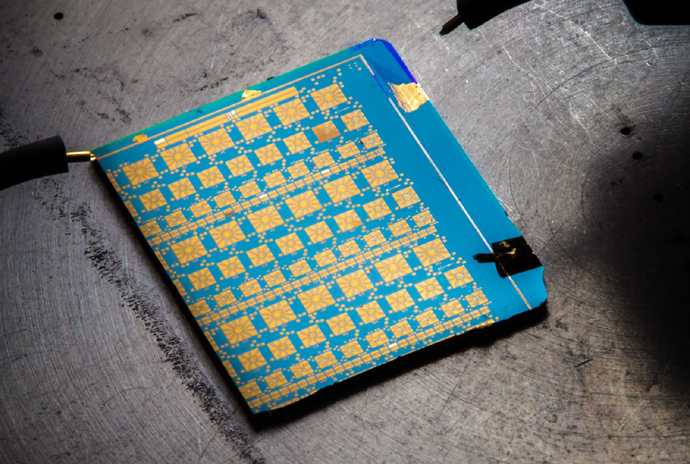
"We demonstrated that you can get a better antenna, a better filter, a better power amplifier using RF MEMS. These were the first demonstrations. Industry took this work and adapted it to their own situations," said Rebeiz. He was awarded the 2014 IEEE Daniel E. Noble Award for Emerging Technologies "for pioneering contributions enabling commercialization of RF MEMS technology and tunable micro- and millimeter-wave systems."
A 2012 article in MEMS Journal predicted that the RF MEMS market would expand by a factor of 200 to $150 million by 2015, driven by implementation in handsets and tablets.
In addition to antennas, RF MEMS technology could find its way into tunable filters for smartphone radios that might one day replace the tens of individual filters built into today's smartphones. With the rise of carrier aggregation-which is the use of multiple frequency channels to divide data, such as a video, that is being sent or downloaded in today's advanced wireless networks-filters are increasingly important, explained Bilgehan Avser, an electrical engineering graduate student in the Rebeiz lab.
"Metal-contact and capacitive switches could turn out to be extremely important for tunable RF front ends of next-generation communication systems," said Avser.
Cellphone base stations could also see RF MEMS implementations. But applications beyond tunable antennas could take more time to be implemented in commercial handsets and tablets, Rebeiz noted.
In recent years, antenna size-and by extension radio frequency performance-has lost ground in phones to larger screens and thinner form factors that exclude larger antennas. At the same time, the demands placed on these antennas have increased. For example, even though antennas have gotten smaller, they are being asked to cover low-frequency bands that would require larger antenna form factors.
"The smartphone antenna, which has long been neglected, now is of prime importance for how to make the smartphone more efficient," said Rebeiz. Incorporating RF MEMS into smartphone antennas yields "tunable" antennas that work efficiently across one or two frequency bands at a time. The frequency at which they function most efficiently, however, can be changed-and RF MEMS metal-contact switches and variable capacitors are used to make the antennas tunable.
"With RF MEMS, you can take an inefficient wideband antenna and turn it into an efficient tuned antenna," said Rebeiz. In this context, RF MEMS serves as a low-loss switched variable capacitor capable of changing the antenna's resonant frequency, which is the frequency at which the antenna operates most efficiently.
Rebeiz has been a leader in RF MEMS research for more than a decade. Much of the early research focused on defense and satellite communication applications such as phased-array systems with sophisticated "beam steering" antennas. In this arena, RF MEMS technologies enable the electronic steering of multiple antennas that function together in order to steer signals to a precise location and ensure the signal does not interfere with other systems. Another application: rugged hand-held radios that work efficiently at many different wireless frequencies.
His research group's contributions include making MEMS robust in the face of process stresses incurred during micro-fabrication, as well as temperature extremes. They also helped demonstrate the vast potential that RF MEMS hold for commercial applications.
In September 2006, Rebeiz became the founding director of the UCSD/DARPA Center on RF MEMS Reliability and Design Fundamentals. As the leader of this eight-year collaboration between universities, the U.S. Federal Government and industry, Rebeiz works to ensure that knowledge on RF MEMS advances are widely available in order to further spur innovation.
Many of the graduate students who worked on RF MEMS projects while at UC San Diego are now working on related challenges in industry-at companies like Cavendish Kinetics and WiSpry that are commercializing RF MEMS technologies, and at companies such as Apple, Qualcomm, Intel and Samsung that are looking to incorporate RF MEMS and other tunable technologies into their products.
A dual-band frequency tunable antenna for carrier aggregation systems. Varactor diodes (black cube above) tune the antenna's frequency. RF MEMS capacitive switches to replace the varactor diodes and improve antenna performance are being developed in the Rebeiz lab.
Source: UCSD Jacobs | School of Engineering
"If you can make smartphone antennas 2 or 3 dB more efficient, you basically halve your download times. Truly, if we accomplish this with RF MEMS technologies, it's a huge deal," said electrical engineering professor Gabriel Rebeiz. His labs have accomplished many fundamental RF MEMS research breakthroughs, created proof-of-concept applications, and led key technology transfer efforts. This work has advanced RF MEMS to the point where large-scale incorporation into smartphone antennas appears probable if not inevitable.
"We demonstrated that you can get a better antenna, a better filter, a better power amplifier using RF MEMS. These were the first demonstrations. Industry took this work and adapted it to their own situations," said Rebeiz. He was awarded the 2014 IEEE Daniel E. Noble Award for Emerging Technologies "for pioneering contributions enabling commercialization of RF MEMS technology and tunable micro- and millimeter-wave systems."
A 2012 article in MEMS Journal predicted that the RF MEMS market would expand by a factor of 200 to $150 million by 2015, driven by implementation in handsets and tablets.
In addition to antennas, RF MEMS technology could find its way into tunable filters for smartphone radios that might one day replace the tens of individual filters built into today's smartphones. With the rise of carrier aggregation-which is the use of multiple frequency channels to divide data, such as a video, that is being sent or downloaded in today's advanced wireless networks-filters are increasingly important, explained Bilgehan Avser, an electrical engineering graduate student in the Rebeiz lab.
"Metal-contact and capacitive switches could turn out to be extremely important for tunable RF front ends of next-generation communication systems," said Avser.
Cellphone base stations could also see RF MEMS implementations. But applications beyond tunable antennas could take more time to be implemented in commercial handsets and tablets, Rebeiz noted.
In recent years, antenna size-and by extension radio frequency performance-has lost ground in phones to larger screens and thinner form factors that exclude larger antennas. At the same time, the demands placed on these antennas have increased. For example, even though antennas have gotten smaller, they are being asked to cover low-frequency bands that would require larger antenna form factors.
"The smartphone antenna, which has long been neglected, now is of prime importance for how to make the smartphone more efficient," said Rebeiz. Incorporating RF MEMS into smartphone antennas yields "tunable" antennas that work efficiently across one or two frequency bands at a time. The frequency at which they function most efficiently, however, can be changed-and RF MEMS metal-contact switches and variable capacitors are used to make the antennas tunable.
"With RF MEMS, you can take an inefficient wideband antenna and turn it into an efficient tuned antenna," said Rebeiz. In this context, RF MEMS serves as a low-loss switched variable capacitor capable of changing the antenna's resonant frequency, which is the frequency at which the antenna operates most efficiently.
Rebeiz has been a leader in RF MEMS research for more than a decade. Much of the early research focused on defense and satellite communication applications such as phased-array systems with sophisticated "beam steering" antennas. In this arena, RF MEMS technologies enable the electronic steering of multiple antennas that function together in order to steer signals to a precise location and ensure the signal does not interfere with other systems. Another application: rugged hand-held radios that work efficiently at many different wireless frequencies.
"We laid out the fundamental work to make RF MEMS a reality, through investigation of so many fundamental problems of MEMS. We solved a lot of these problems and transferred the advances to industry," said Rebeiz.
His research group's contributions include making MEMS robust in the face of process stresses incurred during micro-fabrication, as well as temperature extremes. They also helped demonstrate the vast potential that RF MEMS hold for commercial applications.
In September 2006, Rebeiz became the founding director of the UCSD/DARPA Center on RF MEMS Reliability and Design Fundamentals. As the leader of this eight-year collaboration between universities, the U.S. Federal Government and industry, Rebeiz works to ensure that knowledge on RF MEMS advances are widely available in order to further spur innovation.
Many of the graduate students who worked on RF MEMS projects while at UC San Diego are now working on related challenges in industry-at companies like Cavendish Kinetics and WiSpry that are commercializing RF MEMS technologies, and at companies such as Apple, Qualcomm, Intel and Samsung that are looking to incorporate RF MEMS and other tunable technologies into their products.
"Our RF MEMS work has been a good ride. It has been exactly what I feel research should be. You take a problem. You spend 12 to 14 years on it. You solve its fundamental issues. You transfer it to industry," said Rebeiz. "Have we solved all of the problems? No. But we have gone from 10 percent of understanding of RF MEMS to 90 percent."
A dual-band frequency tunable antenna for carrier aggregation systems. Varactor diodes (black cube above) tune the antenna's frequency. RF MEMS capacitive switches to replace the varactor diodes and improve antenna performance are being developed in the Rebeiz lab.
Source: UCSD Jacobs | School of Engineering
Google Inc. is partnering with solar panel maker SunPower Corp. to invest up to $250 million in leasing solar systems to homeowners. The Mountain View technology giant is contributing up to $100 million, and San Jose-based SunPower will invest $150 million, Google said in a blog post. The goal is to make "it easier for thousands of households across the U.S. to go solar."

Google's plans come at a time when new financing methods are driving a boom in the residential solar market. More homeowners now lease panels from solar companies than buy them outright.
Renewable energy companies are also finding creative ways to finance their businesses. Solar developers who work with homeowners often have a difficult time convincing traditional banks to fund anything smaller than large-scale projects, analysts said. Many investment firms are unsure of the risks associated with solar and unwilling to wait out the payout period, which can last decades.
Google has shown a keen interest in investing in green energy projects in recent years. It has previously invested in solar leasing programs through SolarCity/Clean Power Finance. In November, the company said it planned to pony up $80 million for six utility-scale solar facilities in California and Arizona.
Source: Los Angeles Times
Google's plans come at a time when new financing methods are driving a boom in the residential solar market. More homeowners now lease panels from solar companies than buy them outright.
"Using the fund ... we buy the solar panel systems," Google said. "Then we lease them to homeowners at a cost that's typically lower than their normal electricity bill."
Renewable energy companies are also finding creative ways to finance their businesses. Solar developers who work with homeowners often have a difficult time convincing traditional banks to fund anything smaller than large-scale projects, analysts said. Many investment firms are unsure of the risks associated with solar and unwilling to wait out the payout period, which can last decades.
Google has shown a keen interest in investing in green energy projects in recent years. It has previously invested in solar leasing programs through SolarCity/Clean Power Finance. In November, the company said it planned to pony up $80 million for six utility-scale solar facilities in California and Arizona.
Source: Los Angeles Times
Lorem ipsum dolor sit amet, consectetur adipiscing elit. Nulla luctus cursus magna id placerat. Nulla et lectus eget metus eleifend vulputate. Nullam ligula velit, porttitor eu velit eu, adipiscing tempus arcu. Vestibulum lobortis ligula eget ante lacinia viverra. Nulla dapibus arcu et erat adipiscing aliquet. Maecenas accumsan aliquet turpis. Etiam luctus ligula eget gravida ultricies. Ut nec orci ac mauris rutrum sollicitudin. Nam eleifend dictum elit ac rutrum. Sed vitae placerat mauris. In hac habitasse platea dictumst. Mauris auctor, eros vitae accumsan gravida, velit mi eleifend diam, eget auctor diam tortor ac metus.
Sed at diam sit amet est tempor auctor. Sed nec tincidunt diam. Donec ut metus in turpis pharetra tincidunt. Morbi dapibus sodales nibh ultrices porta. Maecenas quis est nec est suscipit blandit. Curabitur diam est, rutrum sed interdum id, mattis tempus nunc. Sed risus nisi, dignissim et dui a, tincidunt sodales tellus. Quisque at neque lectus. Curabitur bibendum eros quis dui porta viverra. Sed facilisis nulla eu tempus vulputate. Maecenas eu leo lorem. Etiam massa libero, faucibus ut nulla nec, suscipit ultrices augue. Integer blandit volutpat arcu eu mollis.

Nam vestibulum lorem nisi, nec interdum ante tempus eget. Curabitur tincidunt, mauris a dapibus scelerisque, nisl turpis ultricies nisl, id molestie justo metus vel sapien. Nulla commodo enim erat, fringilla convallis massa pharetra tincidunt. Duis tristique tortor nec auctor malesuada. Donec sollicitudin fermentum nunc vel sagittis. Etiam id purus nisl. Vivamus id neque id sapien suscipit ultricies sit amet sed lacus. Maecenas interdum condimentum eros at molestie. Etiam tincidunt at purus nec tincidunt. In semper augue dui, non aliquet sapien congue id. Suspendisse potenti. Nulla facilisi.
Sed porttitor tortor at accumsan tempor. In sit amet mauris id est egestas malesuada eu vel nibh. Vivamus et est nisl. Pellentesque auctor vehicula cursus. Mauris feugiat nulla a erat porta adipiscing. In hac habitasse platea dictumst. Ut pretium ante vel velit fermentum elementum. Quisque eu purus massa. Phasellus mollis cursus dui a hendrerit. Donec varius sapien vitae libero faucibus ullamcorper. Pellentesque quis est sit amet purus blandit varius ac eget felis. Praesent augue enim, accumsan ut magna quis, varius mollis metus. Nullam laoreet magna est, non lacinia sem lobortis ut. Nulla iaculis posuere urna id congue. Cras a vestibulum risus, vitae euismod sapien.
Nam in iaculis mauris, nec ultrices mauris. Suspendisse lacus purus, fermentum nec posuere id, porta eget lorem. Ut consequat purus nec erat luctus consectetur. Donec vitae ornare tortor. Suspendisse blandit laoreet vestibulum. Duis vulputate, risus ut vehicula vulputate, massa ante porttitor erat, vel consectetur diam turpis vitae arcu. Phasellus sapien nulla, tempus vel magna quis, interdum dapibus libero. Morbi dapibus dolor et tellus condimentum, ut tempor turpis interdum. Aliquam varius leo sit amet fringilla sodales. Aliquam enim nisl, tincidunt nec metus sed, laoreet posuere purus. Quisque et elit condimentum, hendrerit nibh sit amet, vestibulum quam. Aliquam dapibus porttitor tincidunt. Phasellus aliquam interdum diam, sit amet posuere sapien laoreet non.
Sed at diam sit amet est tempor auctor. Sed nec tincidunt diam. Donec ut metus in turpis pharetra tincidunt. Morbi dapibus sodales nibh ultrices porta. Maecenas quis est nec est suscipit blandit. Curabitur diam est, rutrum sed interdum id, mattis tempus nunc. Sed risus nisi, dignissim et dui a, tincidunt sodales tellus. Quisque at neque lectus. Curabitur bibendum eros quis dui porta viverra. Sed facilisis nulla eu tempus vulputate. Maecenas eu leo lorem. Etiam massa libero, faucibus ut nulla nec, suscipit ultrices augue. Integer blandit volutpat arcu eu mollis.
Nam vestibulum lorem nisi, nec interdum ante tempus eget. Curabitur tincidunt, mauris a dapibus scelerisque, nisl turpis ultricies nisl, id molestie justo metus vel sapien. Nulla commodo enim erat, fringilla convallis massa pharetra tincidunt. Duis tristique tortor nec auctor malesuada. Donec sollicitudin fermentum nunc vel sagittis. Etiam id purus nisl. Vivamus id neque id sapien suscipit ultricies sit amet sed lacus. Maecenas interdum condimentum eros at molestie. Etiam tincidunt at purus nec tincidunt. In semper augue dui, non aliquet sapien congue id. Suspendisse potenti. Nulla facilisi.
Sed porttitor tortor at accumsan tempor. In sit amet mauris id est egestas malesuada eu vel nibh. Vivamus et est nisl. Pellentesque auctor vehicula cursus. Mauris feugiat nulla a erat porta adipiscing. In hac habitasse platea dictumst. Ut pretium ante vel velit fermentum elementum. Quisque eu purus massa. Phasellus mollis cursus dui a hendrerit. Donec varius sapien vitae libero faucibus ullamcorper. Pellentesque quis est sit amet purus blandit varius ac eget felis. Praesent augue enim, accumsan ut magna quis, varius mollis metus. Nullam laoreet magna est, non lacinia sem lobortis ut. Nulla iaculis posuere urna id congue. Cras a vestibulum risus, vitae euismod sapien.
Nam in iaculis mauris, nec ultrices mauris. Suspendisse lacus purus, fermentum nec posuere id, porta eget lorem. Ut consequat purus nec erat luctus consectetur. Donec vitae ornare tortor. Suspendisse blandit laoreet vestibulum. Duis vulputate, risus ut vehicula vulputate, massa ante porttitor erat, vel consectetur diam turpis vitae arcu. Phasellus sapien nulla, tempus vel magna quis, interdum dapibus libero. Morbi dapibus dolor et tellus condimentum, ut tempor turpis interdum. Aliquam varius leo sit amet fringilla sodales. Aliquam enim nisl, tincidunt nec metus sed, laoreet posuere purus. Quisque et elit condimentum, hendrerit nibh sit amet, vestibulum quam. Aliquam dapibus porttitor tincidunt. Phasellus aliquam interdum diam, sit amet posuere sapien laoreet non.

Keyboards are an essential part of our computers. We use computer keyboards mostly to type but in recent times we have seen a lot of diversification in the use and design of keyboards. They are no longer used to type only text anymore, but to do a lot more tasks. Playing Games, Controlling Media Players and launching applications are just some of them.
To meet these user requirements, keyboards are no longer confined to having only alphabetical keys and numbers. They now come with Media Controlling Keys, Special Keys for Playing games, Shortcut Keys to launch applications and some have even taken a step ahead and come with touch screen instead of the traditional buttons.
We don’t usually get to see these types of keyboards in homes and offices. Let us take a look at some of these unusual but cool Computer Keyboards that make the use of Keyboards easier and much more sophisticated.
1.Optimus Maximus
Optimus Maximus is a fully customizable keyboard that lets you choose the sequence of the characters on the keyboard. Each key of the Optimus Maximus is a stand-alone display that shows the function currently assigned to it.
You can make use of any language like Cyrillic languages, Ancient Greek, Arabic etc. Apart from that you can use any other character sets: notes, numerals, special symbols, HTML codes, math functions etc. The possibilities are infinity.
You can also assign shortcuts of websites you different keys and add an image to easily find the shortcut later. The Optimus Maximus Keyboard has a total of 113 Screens each with a resolution of 48 x 48 Pixels.
2. Logitech diNovo Edge
The Logitech diNovo Edge Keyboard is one of the most stylish Keyboards you will find in the market. The diNovo Edge has been Laser cut from a single, semi-translucent piece of black Plexiglas and set into a brushed-aluminum frame.
The TouchDis navigation makes it possible to move the cursor by Moving a finger up and down or across the disc. A touch-sensitive volume slider will enable you to quickly adjust the computer’s volume. For the fluid and natural Keystrokes,
The PerfectStroke™ key system has been used. No matter how fast and hard you type, it will neither make any sound nor will it hurt your fingers. The Logitech diNovo is rechargeable and a two-hour charge yields up to two months of battery life.
3. Logitech G19 Gaming Keyboard
The Logitech G19 Keyboard is the most sophusticated gaming keyboard. The Logitech G19 Gaming Keyboard is powered by Two Hi-Speed USB 2.0 ports which makes Transfer of data to and from peripherals faster. The Multi-Key input make it possible to use up to five keys at once to perform multiple complex actions while gaming.
The G19 Keyboard has Tilt-able, 320 x 240px, color GamePanel LCD which shows “unprecedented levels of information—both in- and out-of-game—including game stats, system information, VOIP communication data, video playback, image slideshows, and many other items”.
User-selectable back-lit characters make it possible to easily locate keys while playing in dark and Personalize the keyboard to better fit with the rest of your computer and gaming equipment.
Logitech G19 Gaming Keyboard
4. Tipro Custom Assembled Keyboard
Tipro Custom keyboard is a highly flexible and fully customizable keyboard with a Rugged plastic housing. The keyboard has User definable input data control which makes it a best solution for a user’s particular needs. The Tipro has Optional pointing, reading and control modules.
Superior mechanical long travel key switches and metal carrying plate and secure cabling make it rugged and highly reliable. The Tipro Custom Keyboard is Assembled by Unique Micro Designs and comes with a 12 Months Return to Base Warranty.
5. Optimus Tactus
Optimus Tactus does not have any physical keys. Lack of any physical keys means that there are no restrictions on their shape and size of the keys. You can keep a single key on the keyboard or Display all of them on the Touch screen.
The keys can be set in any language. It is just a big Touch Screen Display which can be programmed to display any key or image. It can be programmed to display videos too. There are no limits to what you can do with the Optimus Maximus Keyboard. It is a concept for now but we are sure we will get to see this keyboard in markets soon.
Source: Geeknaut

CNET had a chance to get some hands-on time with this $299 Android smartphone and I recommend you take a look at their image gallery. The OnePlus One looks similar to the Nexus 5, but has even more impressive internal specifications.
The device runs CyanogenMod 11S, which is based on Android 4.4 and looks a lot like a stock Android device. It will be available for $299 for a 16GB white model and just $50 more ($349) for a whopping 64GB black model. I am glad I waited to buy a new phone as this may be my next Android.
Specifications of the OnePlus One include:

This new phone looks too good to be true with specifications beating out the new flagship models priced twice as much. It looks like the only thing missing is water resistance.
As stated in their press release:
The first 100 OnePlus Ones will be available through the OnePlus Phone Smash, starting April 25th. OnePlus fans can go to oneplus.net/smash to apply to smash their current phone in exchange for a OnePlus One. 100 lucky applicants will get the very first 100 OnePlus Ones for just $1 as well as the ability to invite their friends to buy the OnePlus One.
I have a lot of phones available in my collection and I would be willing to smash a couple to get a chance to pick one up so I signed up to enter this Phone Smash lottery. Given the phone is so inexpensive, make sure you can't just sell your existing phone and buy one before you go smashing an iPhone 5S or something.
Source: ZDNet
Samsung’s latest iteration of smartwatches comes in three flavours, all of which are a big improvement over the previous generation. But do they do enough to justify a space on your wrist, or supplant a normal watch (or even rival smartwatch)?
For the Gear 2, Gear 2 Neo and Gear Fit Samsung has – shock! – dumped Google’s Android for its own Tizen open-source software, although you’d be hard-pressed to tell the difference.

The Gear 2 is the flagship smartwatch in Samsung’s current lineup, while the Gear 2 Neo lacks a camera, and the Gear Fit is more of a fitness band than a smartwatch per se. Are they capable of bucking a trend that sees one-third of owners ditching their wearables within six months?
The Gear 2 is a refinement of the "unripened fruit" that was the Galaxy Gear smartwatch released last year. It has slimmed down, removed bulky additions from the microphone and camera from the strap and looks much more like a conventional watch.
The subtle changes make quite a bit of difference to the appearance of the smartwatch, and allow it to fit under a shirt cuff much more easily. As a watch, it functions much better than its predecessor, which is important if you’re trying to replace a traditional watch.
Samsung seems to have appreciated that a watch is a piece of jewellery, and that some users will thus want to customise it. The new Gears are available in a range of colours and straps, while the Gear 2 and Gear 2 Neo have standard watch straps, so users aren’t limited to the colours and types Samsung sells.
A bright, high-resolution 1.63in Super AMOLED screen makes the watch easy to read on the Gear 2, while a responsive touchscreen makes it relatively easy to use. Simple swiping gestures (left or right between the multiple home screens) make navigating between functions and menus pretty intuitive once you realise that a swipe down is akin to the back button on Android.
A single button on the Gear 2 turns the screen on and off, with a double tap launching an app of your choosing. The screen also lights if you lift your wrist to read it.
Source: The Guardian
For the Gear 2, Gear 2 Neo and Gear Fit Samsung has – shock! – dumped Google’s Android for its own Tizen open-source software, although you’d be hard-pressed to tell the difference.
The Gear 2 is the flagship smartwatch in Samsung’s current lineup, while the Gear 2 Neo lacks a camera, and the Gear Fit is more of a fitness band than a smartwatch per se. Are they capable of bucking a trend that sees one-third of owners ditching their wearables within six months?
The Gear 2 is a refinement of the "unripened fruit" that was the Galaxy Gear smartwatch released last year. It has slimmed down, removed bulky additions from the microphone and camera from the strap and looks much more like a conventional watch.
The subtle changes make quite a bit of difference to the appearance of the smartwatch, and allow it to fit under a shirt cuff much more easily. As a watch, it functions much better than its predecessor, which is important if you’re trying to replace a traditional watch.
Samsung seems to have appreciated that a watch is a piece of jewellery, and that some users will thus want to customise it. The new Gears are available in a range of colours and straps, while the Gear 2 and Gear 2 Neo have standard watch straps, so users aren’t limited to the colours and types Samsung sells.
A bright, high-resolution 1.63in Super AMOLED screen makes the watch easy to read on the Gear 2, while a responsive touchscreen makes it relatively easy to use. Simple swiping gestures (left or right between the multiple home screens) make navigating between functions and menus pretty intuitive once you realise that a swipe down is akin to the back button on Android.
A single button on the Gear 2 turns the screen on and off, with a double tap launching an app of your choosing. The screen also lights if you lift your wrist to read it.
Source: The Guardian


